After a wreck
Auto accident and personal injury care
Exam, x-rays and a documented care plan for whiplash and other injuries after a car accident or personal injury.
Why the pain often shows up two days after the wreck
Right after a collision, adrenaline does the talking. You swap insurance information, drive home and feel mostly fine, maybe a little stiff. Then the next morning, or the one after that, the neck will not turn and a headache sits behind your eyes. That delay is common with whiplash, the quick back and forth snap of the head that strains the muscles and ligaments of the neck before swelling and guarding set in. A slow crash in a parking lot can do it too.
Whiplash is not limited to the neck. Shoulders, mid back and low back take the force of the seatbelt and the seat, and a jarred joint may only announce itself when you return to lifting, driving or lying flat to sleep. The doctors at Tyler Chiropractic, a family practice on South Baxter Avenue since 1977, know the pattern. People wait because they assume it will pass, and some of it does not.
One plain line before anything else. If after a crash you have a severe headache, numbness, weakness, or loss of bladder or bowel control, go to the emergency room first. Those signs need a hospital, not a chiropractic office. Once you have been cleared there, we are glad to see you.
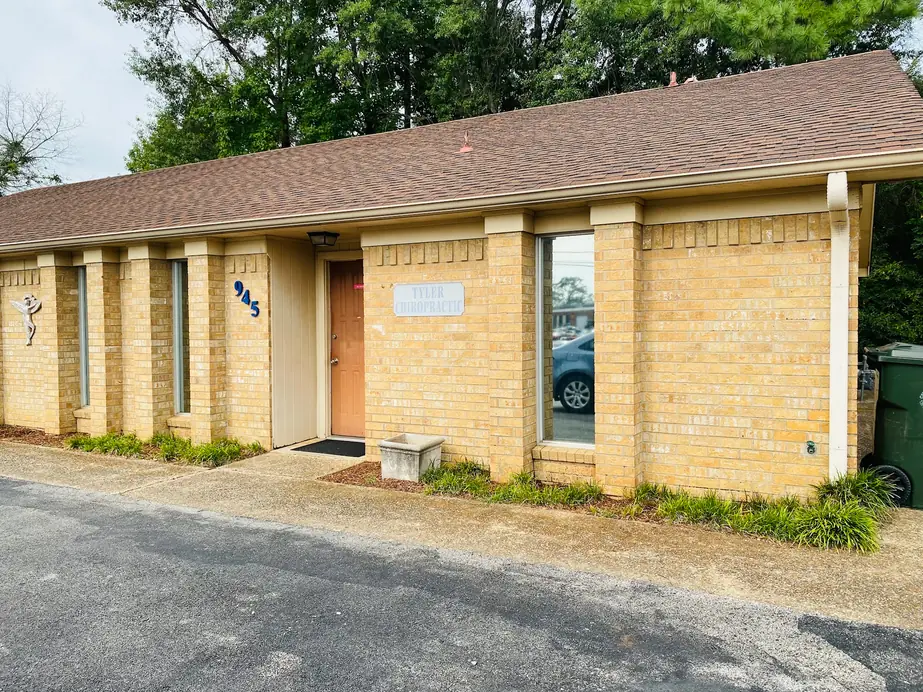
Buff brick frontage of Tyler Chiropractic at 945 S. Baxter Ave
Exam and x-rays, so the findings are on paper
Your first visit follows the same order as any new patient: a health history, then an exam, then x-rays when they are warranted. After a crash we ask for the details that matter, such as where you were seated, which way you were struck, when the first symptom appeared and how it changed over the first days. The exam compares neck and spine motion, muscle tension and tender spots side by side, so the doctor sees what moved wrong and what only feels sore.
Films can show alignment, disc space and signs of an earlier injury, which helps separate what is new from what was already there. Dr. James Smith or Dr. Justin Smith reviews them with you in a report of findings, along with the course of care they recommend. You see the same pictures the doctor does, and you decide with full information.
If you open a personal injury claim, records matter. We do not give legal advice, and we make no promises about claims or insurance. What we do is write down, in plain dated notes, what the exam and x-rays found, what care was given and how you responded. The records document findings and care. What anyone decides from them is a matter between you and your own attorney or insurer.
A care plan that follows your recovery from week one on
Recovery is rarely a straight line, so the plan is built around you. Early on, care is usually gentle and frequent. That can mean low force adjustments with the Activator instrument when the neck is guarded, a cold pack for fresh swelling, and ultrasound or trigger point work on the muscles clamped down around the injury. Segmental traction can help stiff segments move again once they are ready for it.
As the acute stage settles, visits spread out and the work shifts toward motion, strength and habit: stretches for home, advice on sleeping and driving posture, and a gradual return to the job and the sports you set aside. We re-check at set points and tell you plainly if progress is slower than it should be, because sometimes another kind of provider should weigh in, and we will say so.
Call (903) 595-2664 or come by 945 S. Baxter Ave in Tyler to set up your free consultation. Bring any emergency room paperwork or crash report you have, and tell us what changed in the days after the wreck, even the small things.
Tyler Chiropractic — Most major insurance accepted, including BC/BS, Medicare and United Healthcare. Call 903-595-2664.